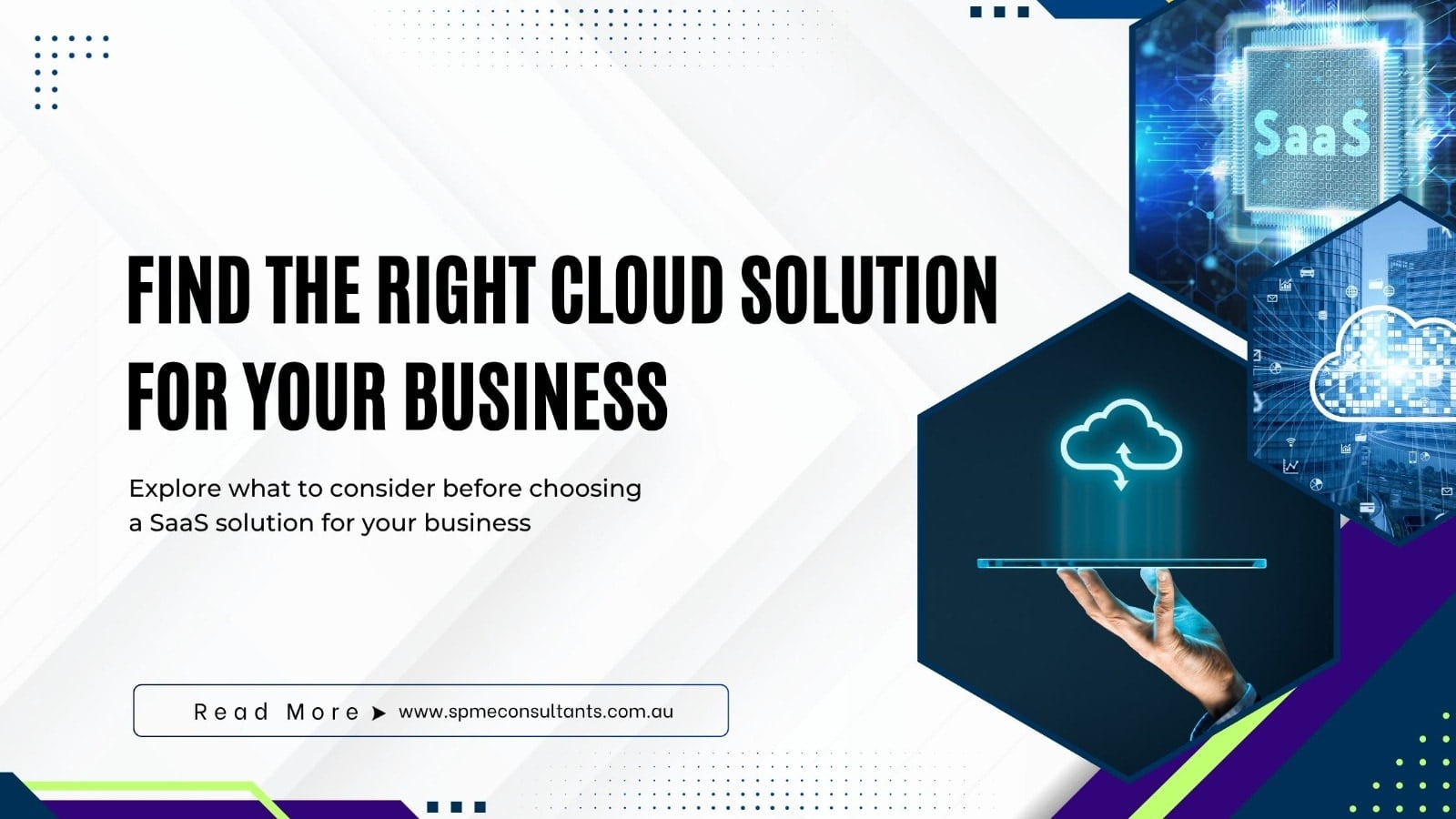
Choosing the right cloud software can have a major impact on how efficiently a business operates. From managing projects and customer relationships to automating workflows and analysing business data, Software as a Service (SaaS) has become an important part of modern business operations.
However, with hundreds of cloud platforms available, selecting the right solution is not simply about choosing the software with the most features. Australian businesses need solutions that fit their processes, budget, security requirements, scalability goals and long-term business strategy.
This is where professional SaaS services in Australia can make the decision easier and more effective.
What Are SaaS Services?
SaaS refers to software applications that are hosted in the cloud and accessed through the internet rather than installed and maintained on individual computers. Businesses typically pay a subscription fee and can access the software from different locations and devices.
Common SaaS solutions include:
- Customer relationship management (CRM)
- Project and task management
- Accounting and finance
- Human resources
- Sales and marketing
- Business analytics
- Document and contract management
- Workflow automation
- Communication and collaboration
The advantage is that businesses can adopt powerful software without having to manage extensive IT infrastructure themselves.
Why Australian Businesses Are Investing in Cloud Solutions
Cloud technology can help businesses reduce manual processes, improve collaboration and gain better visibility across their operations.
For growing Australian businesses, SaaS can also provide flexibility. Teams can access important information remotely, add users as the organisation grows and integrate different business systems.
However, simply moving to the cloud does not automatically improve business performance. The solution needs to be selected and implemented correctly.
A platform that works well for one organisation may be unsuitable for another because every business has different workflows, customers, teams and operational requirements.
How to Choose the Right SaaS Solution
1. Start With Your Business Requirements
Before comparing software platforms, identify the business problem you are trying to solve.
For example, your business may need to:
- Reduce repetitive administrative work
- Improve customer management
- Track project progress
- Automate approvals
- Centralise business information
- Improve reporting
- Manage contracts more efficiently
Creating a clear list of requirements helps prevent your business from choosing software simply because it has an impressive list of features.
2. Look Beyond Features
More features do not necessarily mean better software.
A platform should be practical for your employees to use every day. Complicated systems can create unnecessary training requirements and may reduce adoption across the organisation.
Consider whether the software is easy to navigate, whether it supports your existing workflows and whether employees can realistically use it without constant technical assistance.
Experienced SaaS consultants can help businesses assess these requirements and identify solutions that align with their actual operational needs.
3. Consider Integration With Existing Systems
Your SaaS platform should not operate as an isolated system.
Businesses often use multiple applications for accounting, CRM, project management, communication, reporting and other functions. If these systems cannot communicate effectively, employees may have to enter the same information multiple times.
When evaluating SaaS solutions, check whether the platform integrates with your existing business applications and whether APIs or automation tools are available where required.
Effective integration can create a more connected technology environment and reduce unnecessary manual data entry.
4. Evaluate Scalability
Your software should support your business as it grows.
Consider how easily you can add users, manage increasing data volumes, introduce new workflows and expand functionality. Also examine the pricing structure to understand how costs may change as your organisation grows.
The cheapest solution today may not be the most cost-effective option over the next three to five years.
A scalable cloud solution can provide greater flexibility as business requirements change.
5. Assess Security and Data Management
Security should be an important consideration when selecting cloud software.
Before committing to a platform, review its security features, access controls, data protection practices, backup processes and compliance capabilities. Businesses should also understand where their data is stored and how it can be accessed or exported.
This is particularly important when SaaS platforms handle customer information, financial data, contracts or other commercially sensitive information.
6. Calculate the Total Cost
SaaS pricing is often based on monthly or annual subscriptions, but the subscription fee is only one part of the overall investment.
Businesses should also consider:
- Implementation costs
- Data migration
- Integration
- User training
- Customisation
- Ongoing support
- Additional user or storage fees
Comparing the total cost of ownership provides a more realistic picture of whether a solution offers value for money.
Why Work With SaaS Consultants?
Selecting and implementing business software can become complicated, particularly when a company is moving away from spreadsheets, disconnected applications or manual processes.
SaaS consultants can assess current workflows, identify technology gaps, compare suitable platforms and help businesses plan implementation.
Rather than choosing software based purely on popularity, consulting support focuses on how technology can solve specific operational challenges.
The right approach can also help businesses avoid unnecessary software purchases, poor integration and solutions that employees struggle to adopt.
SaaS Services in Australia: Choose Based on Business Value
The right cloud solution should do more than digitise an existing process. It should help your business work more efficiently.
When comparing SaaS services in Australia, consider the complete picture: business requirements, usability, integration, scalability, security, implementation and long-term costs.
The best solution is not necessarily the platform with the biggest feature list. It is the one that fits your business today while providing enough flexibility to support where you want to go tomorrow.
For Australian businesses considering cloud technology, professional guidance can make the selection and implementation process more structured, practical and aligned with commercial objectives.
Looking for the right SaaS solution for your business? Work with experienced SaaS professionals to assess your requirements, identify suitable cloud platforms and build a technology environment that supports smarter business operations.